
They Said No One Would Pay for Email. Superhuman Proved Them Wrong.
The GTM story of how Superhuman turned premium email into a billion-dollar cult movement.

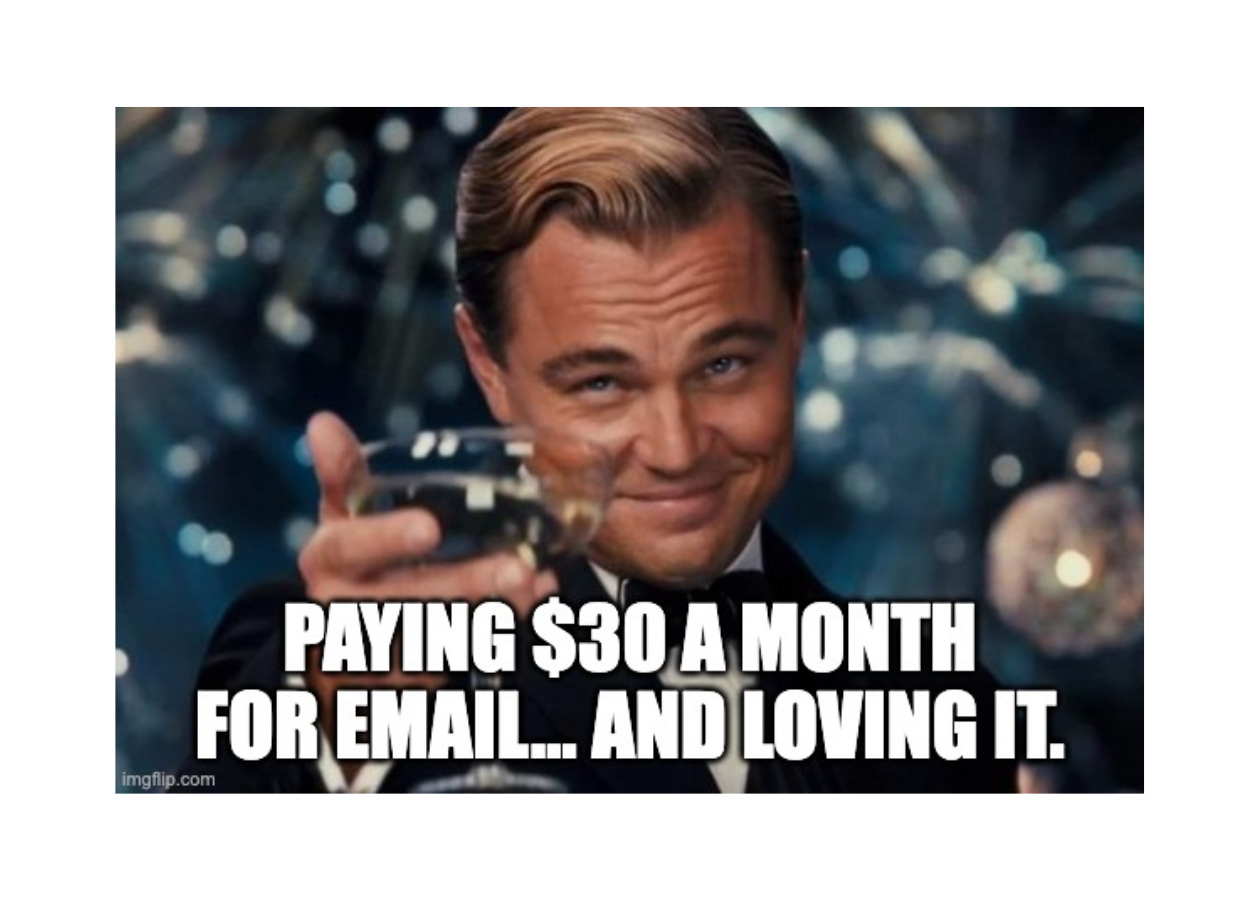
Most startups avoid taking on Google or Microsoft. Rahul Vohra ran straight at them.
In 2017, Vohra launched Superhuman: a premium, lightning-fast email client that promised to make professionals twice as productive in their inbox. Where Gmail and Outlook felt bloated and sluggish, Superhuman was sleek, keyboard-driven, and at $30/month—deliberately positioned as the “Tesla of email.”
It was a bold bet. Who would pay for email when free was the default? And how could a startup survive in a category where dozens had already failed?
The answer: by building differently. Superhuman didn’t just ship product—it rewrote the go-to-market playbook. From manual onboarding to a scientific approach to product-market fit, Vohra and his team made contrarian choices that turned Superhuman into one of the most studied GTM stories in tech.
Here’s how they did it and the lessons founders and PMMs can steal.
1. The Myth of Virality
At LinkedIn, Rahul learned a hard truth from growth leader Elliot Shmukler:
“There is no such thing as a truly viral product.”
Even Facebook at its peak only sustained a viral factor of ~0.7. Import tricks like address book uploads topped out around 0.4.
True growth didn’t come from gimmicks. It came from word of mouth—from products so good people couldn’t help but share them.
At Superhuman, this insight became cultural DNA: obsess over delight, detail, and extraordinary quality. If people loved the product, they’d spread it.
👉 Lesson for founders: Don’t waste cycles on hacks. Build something remarkable enough to market itself.
2. How Speed Became the Positioning
Through hundreds of interviews with Gmail and Outlook users, one frustration dominated:
Email takes too long.
Gmail and Outlook feel slow.
That single theme shaped Superhuman’s positioning: the fastest email ever made.
Like Chrome claimed “the fastest browser,” Superhuman would own speed.
Rahul applied a simple framework:
Unique → No competitor claimed speed.
Available → The narrative space was wide open.
Reinforcing → Speed supported product strategy (incumbents couldn’t copy easily).
Memorable → At parties, users pitched it in five words: “It’s insanely fast email.”
👉 Lesson: Own one word. Make it memorable. Then design everything around it.
3. Manual Onboarding: A Contrarian GTM Move
Instead of chasing self-serve signups, Superhuman onboarded every single user by hand. At peak, 20 people were doing 1:1 sessions.
Why?
Engagement & retention → Users became power users immediately.
Buying time → Engineers could focus on core product instead of onboarding flows.
Brand building → Handcrafted onboarding made the product feel exclusive.
Rahul personally onboarded the first 200 users. Watching them live, he logged bugs, spotted friction, and refined the experience. The process itself became a differentiator.
👉 Lesson: For mission-critical products, good friction can be a moat.
4. The Product-Market Fit Engine
Rahul codified PMF into a metric, not a feeling. He used Sean Ellis’s survey:
“How would you feel if you could no longer use this product?”
Very disappointed
Somewhat disappointed
Not disappointed
Ellis’s benchmark:
<40% “very disappointed” → struggling
40% → breakout growth potential
Superhuman’s first score: 22%.
The insight was where to focus:
Ignore “not disappointed” → wrong audience.
Don’t over-prioritize “very disappointed” → they already love you.
Focus on “somewhat disappointed” → they feel the core benefit, but something holds them back.
Superhuman’s roadmap followed this algorithm:
50% doubling down on what superfans adored.
50% fixing blockers for almost-lovers.
Within three quarters, PMF score climbed to 58%.
👉 Lesson: PMF isn’t binary. It’s a number you can improve systematically.
5. Game Design, Not Gamification
Superhuman made email feel playful, not just efficient.
Toys before games → Autocomplete for snooze/reminders (“2d” = two days, “never” = never).
Surprises → Automatic time zone math.
Flow state → Keyboard shortcuts keep users in rhythm.
This wasn’t about points or badges. It was about building fun into function.
👉 Lesson: Gamification fades. Game design endures.
6. Pricing at $30/Month—When Gmail is Free
In a world where Gmail and Outlook were free, charging $30 sounded insane.
But Superhuman surveyed early adopters with the Van Westendorp Price Sensitivity Meter:
Too cheap → perceived as low quality.
Too expensive → won’t buy.
“Expensive but worth it” → $30/month.
That became the price. It signaled premium quality and matched ROI: users reported saving 4+ hours per week.
👉 Lesson: Price for identity and ROI, not for affordability.
7. Scaling Without Slowing Down
As Superhuman grew, Rahul realized he was spending only 6% of his week on product.
The fix?
Hire a President to run ops.
Reduce direct reports from 8 → 2.
Reclaim 60%+ of time for product and marketing.
👉 Lesson: Founders must protect their “zone of genius.” Redesign your role as deliberately as you design your product.
8. The Secret to Longevity
Dozens of email startups failed. Superhuman endured. Why?
Detail obsession → even custom font design.
Contrarian GTM → manual onboarding, premium pricing, positioning around speed.
PMF discipline → systematized and measured.
Adaptability → from prosumer darling to enterprise platform with AI-first workflows.
👉 Lesson: Longevity comes from evolving, not just launching strong.
📌 Takeaways for Founders & PMMs
Don’t chase viral gimmicks. True virality is word of mouth, powered by delight.
Position around one attribute (Superhuman = speed).
Handcraft early growth—onboarding can be your moat.
Measure PMF and let it write your roadmap.
Borrow from game design, not gamification.
Price with confidence: charge where ROI is undeniable.
Redesign yourself: founders must scale alongside the company.
Superhuman proved that even in the most entrenched categories, founders can win with clarity, conviction, and craftsmanship.
If you found this teardown helpful, share it with a fellow founder or PMM.
Ready to level up? Check out the Product Marketing School — where I help people become high-impact product marketers.
— Henry ✌️